A roof replacement is arguably one of the most significant and stressful financial investments you will ever make as a homeowner. It is the primary shield protecting your family, your physical belongings, and your entire real estate net worth from the unrelenting forces of nature. Unlike a kitchen remodel or fresh landscaping, replacing a roof is not a vanity project; it is a critical necessity that dictates the structural integrity of your entire home. When a roof fails, it does not fail in isolation. Water intrusion can systematically destroy your attic insulation, rot your framing, ruin your drywall, and introduce hazardous black mold into your living spaces.
Despite the high stakes, the industry surrounding exterior home improvements can be incredibly difficult for the average consumer to navigate. It is a sector frequently plagued by fluctuating estimates that seem entirely arbitrary, aggressive door-to-door sales tactics, and fly-by-night operators who disappear the moment a job is completed. For someone who has never managed a major construction project, the process of finding a trustworthy professional can feel akin to walking through a minefield blindfolded.
However, taking control of this process is entirely possible. The solution lies in shifting your mindset from that of a passive consumer to an active project manager. By utilizing a step-by-step framework for vetting professionals, decoding complex contract language, and understanding the physical components of your home’s exterior, you can ensure your investment lasts for decades.
Finding the right professional requires looking far beyond the lowest price tag. It demands a thorough evaluation of local reputation, verified safety credentials, precise project scoping, and ironclad warranty coverages. This comprehensive guide will equip you with the knowledge needed to make an informed, confident decision.
Phase 1: Conduct Initial Local Research and Build Your Shortlist
The foundation of a successful exterior renovation project begins long before you look at shingle samples. It starts with building a carefully curated shortlist of highly qualified candidates. In an era where anyone can build a slick website in a matter of hours, you must rely on ground-level research to separate established community pillars from transient operators.
Start with Hyper-Local Referrals Over Blind Web Searches
When you begin your search, it is tempting to simply type your query into a search engine and start calling the first three numbers that appear. However, this approach often yields results based on search engine optimization budgets rather than actual craftsmanship. Instead, tap into your neighborhood networks to find a local roofer who has an established, verifiable history in your immediate geographic area.
-
Consult your community network: Speak with neighbors who have recently had their exteriors updated. Post inquiries on community message boards or neighborhood social media groups. People are generally very eager to share both their glowing recommendations and their cautionary tales.
-
Leverage real estate professionals: Reach out to local real estate agents. Because agents frequently need to arrange rapid, high-quality repairs to close property sales, they usually maintain a tightly vetted list of reliable contractors who perform exceptional work under tight deadlines.
-
Understand the danger of storm chasers: After a severe hail storm or hurricane, your neighborhood may be flooded with out-of-state crews knocking on doors. While some may do adequate work, hiring transient crews presents a massive risk. If a leak develops two years later, that crew will be operating in a different state, leaving you with no local recourse and an invalidated warranty. Prioritizing professionals with physical brick-and-mortar offices in your county ensures they are accountable to the community and understand your specific municipal building codes.
-
Investigate local permits: Check with your city or county building department to see which businesses are pulling the most permits in your subdivision. Consistent permit acquisition is a strong indicator of an active, legitimate business operation.
Audit Digital Portfolios and Regulatory Standing
Once you have gathered a preliminary list of names from your community, it is time to rigorously vet their digital footprint and regulatory standing. You are looking for a history of consistent excellence and professional conflict resolution.
-
Read the lowest reviews first: A business with a perfect five-star rating and only ten reviews is less impressive than a business with a 4.8-star rating and five hundred reviews. Go straight to the one-star and two-star reviews. Pay close attention to how the management responds to these complaints. Do they become defensive and aggressive, or do they offer professional, actionable solutions to rectify the homeowner’s issue? How roofing contractors handle things when a project goes sideways is a true test of their integrity.
-
Check the Better Business Bureau (BBB): Search for each candidate on the BBB website. Look beyond the letter grade and examine the specific history of consumer complaints. Ensure there is no pattern of unresolved financial disputes or abandoned projects.
-
Verify state licensing: In states that require specialized licensing for exterior trades, visit the state regulatory board’s website. Input the candidate’s business name or license number to verify that their license is active, in good standing, and not currently under probation or investigation for code violations.
-
Narrow your focus: By filtering out anyone with poor conflict resolution skills, lapsed licenses, or no physical local address, you should be able to narrow your massive initial list down to a highly qualified shortlist of three to four competitive candidates to invite to your home for an inspection.
Phase 2: Verify Credentials, Insurance, and Structural Specializations
Inviting a contractor to your property to provide an estimate is the next logical step. However, before you even allow them to set foot on a ladder leaning against your gutters, you must verify their credentials. This phase is entirely about mitigating your personal financial and legal risk.
Demand Direct Proof of Comprehensive Insurance Coverage
Construction is an inherently dangerous industry. Heavy materials are hoisted dozens of feet into the air, power tools are used on steep inclines, and the potential for property damage or physical injury is constant. If an uninsured worker falls off your property, you—the homeowner—could be held legally and financially responsible for their medical bills and lost wages.
-
General Liability Insurance: This policy protects your physical property. If a worker drops a bundle of shingles through your skylight, or if a sudden rainstorm occurs while the decking is exposed and ruins your hardwood floors, general liability insurance covers the cost of repairing the damage to your home.
-
Workers’ Compensation Insurance: This is the most critical protection for you as a homeowner. It covers the medical expenses and lost wages of any employee who is injured while working on your property. If an independent local residential roofer claims they do not need workers’ compensation because they have a small crew, you should immediately disqualify them. The risk of devastating litigation is simply too high.
-
The Certificate of Insurance (COI) protocol: Never accept a photocopied piece of paper handed to you by a salesperson as proof of insurance. Unscrupulous operators have been known to forge these documents or let their policies lapse after paying the initial premium. Instead, ask the candidate for the name and phone number of their insurance agent. Call the agent directly and request that a current Certificate of Insurance be emailed directly from the agency to you, with your name listed as the certificate holder.
Look for Manufacturer Designations and Severe-Weather Expertise
Not all installations are created equal. The longevity of your investment depends heavily on the specific building standards the crew adheres to, as well as their relationship with material manufacturers.
-
Manufacturer certifications matter: Major shingle manufacturers (such as GAF, Owens Corning, or CertainTeed) offer elite certification tiers to crews that undergo continuous factory training and maintain impeccable credit and consumer ratings. Achieving statuses like “Master Elite” or “Platinum Preferred” is difficult; typically, less than 2% of businesses in a given region qualify. Hiring a certified crew is essential because manufacturers will only authorize their extended, non-prorated system warranties if the installation is performed by one of their certified partners.
-
Assess severe-weather building codes: Depending on your geographic location, your home may be subjected to hurricanes, extreme hail, or heavy snow loads. Discuss specialized installation techniques designed to withstand these specific threats.
-
The value of upgraded standards: Ask candidates about their familiarity with specialized build programs. Opting for a fortified roofing system—which often includes ring-shank nails for superior deck adherence, specialized sealed roof decks to prevent water intrusion if shingles blow off, and high-impact resistant materials—can drastically improve your home’s resilience. Furthermore, many major insurance carriers offer substantial annual premium discounts for homes built to these rigorous, certified weather-resistant standards.
Phase 3: Analyze and Compare Detailed Project Estimates
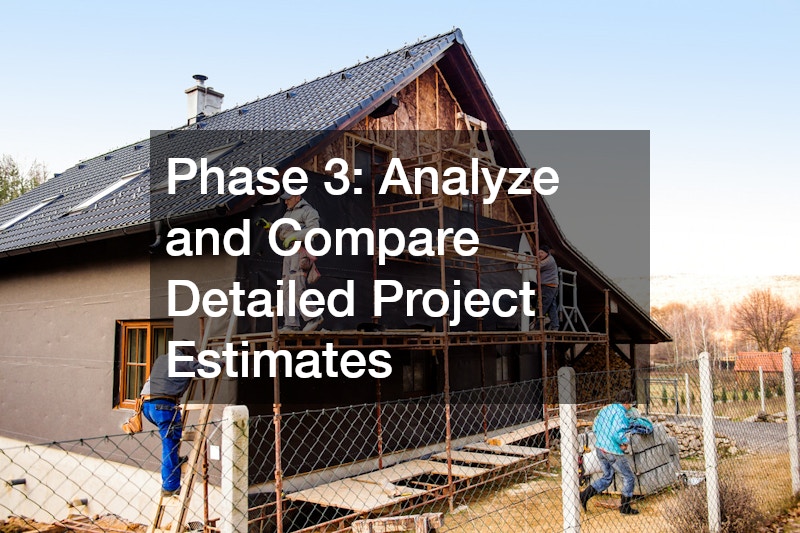
Once your vetted candidates have inspected your property, they will provide you with project estimates. This is the stage where many homeowners become confused, as quotes for the exact same house can vary by thousands of dollars. The key to making the right choice is learning how to read between the lines of these proposals.
Insist on Fully Itemized, Written Scopes of Work
A professional estimate is not a single number jotted down on the back of a business card, nor is it a one-paragraph email stating, “Replace shingles: $12,000.” An estimate is a comprehensive blueprint of the work to be performed. If you are comparing three quotes, you must ensure you are comparing apples to apples.
-
Reject flat-rate quotes: Vague estimates are a recipe for disaster. They allow dishonest operators to cut corners by reusing old flashing, installing cheap, paper-based underlayment, or skipping crucial ventilation upgrades. You must demand a fully itemized scope of work.
-
Components of a proper estimate: A rigorous quote for major roofing replacements must list the exact brand, style, and color of the primary shingles. More importantly, it must detail the accessory components. It should specify the installation of a synthetic underlayment (rather than outdated asphalt felt), the linear footage of ice and water shield to be installed in the valleys and along the eaves, the type of metal drip edge being used, and the specific plan for replacing pipe boots and chimney flashing.
-
Address attic ventilation: Proper ventilation is the lifeblood of your home’s exterior. If hot, moist air cannot escape your attic, it will literally bake your new shingles from the inside out, instantly voiding the manufacturer’s warranty. The estimate must detail how the crew plans to balance intake ventilation (soffit vents) with exhaust ventilation (ridge vents or box vents).
-
Prepare for hidden decking costs: No one has x-ray vision. Until the old materials are entirely stripped away, it is impossible to know the exact condition of the plywood decking underneath. Rotted or warped wood must be replaced before new materials can be installed. A transparent estimate will clearly state the per-sheet price for replacing damaged plywood or OSB, so you are not hit with arbitrary fees on the day of construction.
Identify and Deflect High-Pressure Sales Tactics
During the estimation phase, you will likely encounter different styles of communication. It is vital to recognize the psychological tactics used by aggressive salespeople and protect your decision-making boundaries.
-
Beware the “Today Only” discount: One of the most common red flags is the manufactured urgency tactic. If a salesperson offers you a massive discount—often claiming they have leftover materials from a nearby job or a special promotional rate—but insists the offer is only valid if you sign a contract immediately, ask them to leave. Reputable roofers provide fair, stable pricing based on material costs and labor rates, and that price should be valid for at least 30 days.
-
Do not sign over your insurance check: If your project is the result of an insurance claim due to storm damage, be incredibly wary of anyone who asks you to endorse your insurance check over to them before any work has commenced. You should remain in control of the funds until the work is satisfactorily completed.
-
Take your time: A trustworthy professional understands that this is a major decision. They will happily provide you with the estimate, answer all your questions, and encourage you to take a few days to review the documentation, call references, and compare their proposal against others.
Phase 4: Evaluate Service Execution, Safety Protocols, and Property Protection
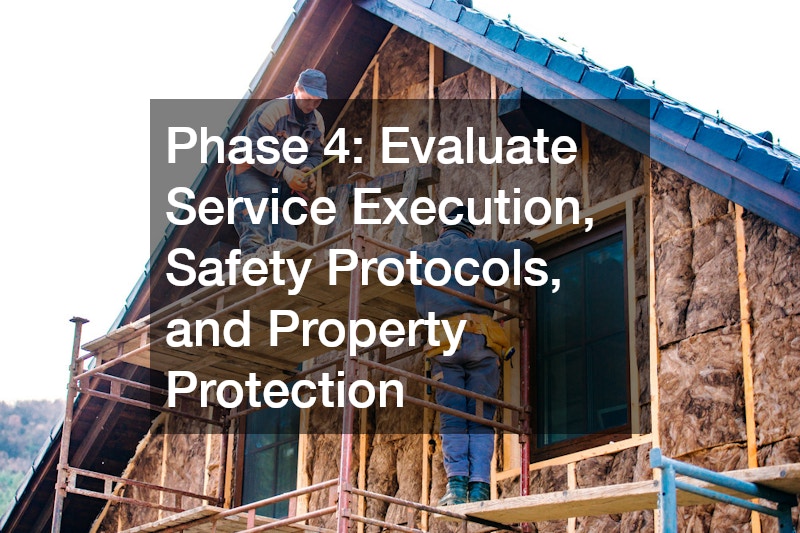
Choosing a contractor is not just about the final product; it is deeply tied to the actual experience of having a major construction project taking place on your property. The tear-off and installation process is violently chaotic. You must ensure the team you hire has stringent protocols to manage this chaos.
Establish Clear Property Protection and Cleanup Protocols
The demolition phase generates thousands of pounds of sharp, heavy debris. Old shingles, rusty nails, metal flashing, and splintered wood will be raining down from your eaves. Without meticulous protection protocols, this debris can destroy your landscaping, crack your driveway, scratch your siding, and puncture the tires of your vehicles.
-
Inquire about specific protective measures: Ask the candidate exactly how they plan to protect your home. Look for answers that include the use of specialized catch-all netting systems that drape from the gutters to the ground, guiding debris safely away from the siding. They should also specify using plywood to shield fragile windows, air conditioning units, and pool equipment from falling debris.
-
Discuss driveway protection: Dumpsters and heavy material delivery trucks can easily crack a concrete driveway or sink into an asphalt one. Ensure the team commits to placing heavy wooden planks under the wheels of any dump trailers to distribute the weight safely.
-
Mandate magnetic sweeps: A single stray roofing nail hidden in your grass can cause severe injury to a child or a pet. The cleanup protocol must explicitly include multiple passes around the entire perimeter of your property using industrial magnetic sweepers to collect hidden fasteners.
-
Clarify on-site supervision: Ask who will actually be managing the job site. Will the roof installers be supervised by a dedicated, English-speaking field manager employed by the company, or is the physical labor being entirely subcontracted out to a third-party, temporary crew? You want a dedicated project manager on-site who can answer your questions and enforce safety standards throughout the day.
Deconstruct the Difference Between Material and Workmanship Warranties
Warranties are often used as a major selling point, but their actual terminology is frequently misunderstood by homeowners. You must separate the promise of the material from the promise of the labor.
-
The 30-year shingle myth: When a salesperson touts a “30-year” or “Lifetime” warranty, they are almost always referring to the manufacturer’s material warranty. This warranty only covers factory defects in the shingle itself. If the shingle degrades prematurely due to a manufacturing error, the factory will provide replacement materials. However, it does not cover the cost of the labor required to tear off the defective roof and install the new one.
-
The reality of installation errors: The vast majority of premature failures and subsequent interior leaks are not caused by defective materials; they are caused by human error during installation. Improperly nailed shingles, poorly sealed pipe boots, and missing kick-out flashing are installation failures, and these are not covered by the manufacturer’s basic material warranty.
-
Demand a robust workmanship warranty: You must evaluate what the proposed roofing services include regarding a standalone workmanship warranty. This is a separate guarantee provided directly by the installing business, promising that if a leak occurs due to their error, they will return and fix it at no cost to you. Aim for a minimum of 5 to 10 years of labor coverage. Keep in mind that a workmanship warranty is only as good as the company backing it—which is why your earlier research verifying their long-term local presence is so vital.
Phase 5: Finalize the Contract and Secure the Payment Terms
You have conducted your research, compared the itemized scopes of work, and selected the candidate that offers the best balance of quality, protection, and price. The final step before the hammers start swinging is codifying the agreement in a legally binding contract and establishing a secure financial arrangement.
Ensure Every Verbal Agreement Is Codified in Writing
Throughout the estimation and negotiation process, you and the salesperson have likely discussed numerous details. Perhaps they promised to paint your chimney to match the new shingles, or they assured you they would avoid placing equipment on your newly planted flower beds. However, in the realm of construction law, verbal agreements are essentially meaningless.
-
If it is not written, it does not exist: Take the time to read the final contract word for word. Ensure that every single accommodation, timeline promise, and specific material choice discussed is explicitly written into the document.
-
Verify administrative details: The contract must outline exact target start dates and estimated completion dates (accounting for weather delays). It should also specify daily working hours to ensure crews are not waking your family up at 5:00 AM or hammering late into the evening. It must clearly state that the contractor is solely responsible for acquiring all necessary municipal building permits and arranging for the final city inspections.
-
Demand a lien waiver: This is a crucial, often overlooked legal detail. If a contractor fails to pay the wholesale distributor for the materials used on your home, or fails to pay their subcontractors, those entities can place a mechanic’s lien on your property—even if you have already paid the contractor in full. Reputable roofing companies will readily provide you with a signed lien waiver upon final payment, legally releasing you from any of their third-party debts. If a candidate hesitates or refuses to provide a lien waiver, terminate the relationship immediately.
Implement a Balanced, Milestone-Based Payment Structure
The way you structure the payment for the project is your ultimate leverage to ensure the work is completed to your total satisfaction. Never hand over the total cost of the project before the work is finished.
-
Avoid massive upfront payments: A request for 100% of the project cost upfront is a massive red flag. It is the hallmark of a scam artist or a business in severe financial distress trying to use your money to pay off the debt of their previous job.
-
Establish a standard milestone schedule: A fair, secure payment schedule protects both you and the contractor. A standard structure for a highly professional roofing company might look like a 10% to 30% initial deposit paid upon signing the contract and scheduling the project. This covers the initial order of specialized materials.
-
Hold the final balance hostage: A secondary payment might be required on the day the materials are delivered to your driveway and the tear-off begins. However, you must absolutely withhold the final, substantial remaining balance (often 30% to 50% of the total cost) until the very end. This final payment should only be released after the installation is completely finished, the property is immaculately cleaned of all debris and nails, the final municipal inspection has been passed, and you have physically received your lien waivers and written warranty documentation.
Conclusion
Navigating a major exterior renovation is undeniably a daunting prospect. The financial commitment is substantial, the disruption to your daily life is significant, and the long-term consequences of a poor installation can be devastating to your home’s infrastructure. However, the process does not have to be a gamble.
The success of your project hinges entirely on the integrity, technical skill, and local accountability of the professionals you choose to hire. By refusing to rush the decision-making process, you take control of the narrative. Taking the extra time to rigorously vet candidates, cross-reference insurance policies, demand fully itemized scopes of work, and enforce secure payment structures transforms a highly stressful home improvement chore into a smooth, secure, and permanent investment in your property.
Protecting your home starts with protecting yourself as a consumer. Do not let aggressive sales tactics or confusing industry jargon intimidate you. If you are currently in the process of reviewing estimates and feel overwhelmed, take a step back. Download a printable contractor vetting checklist to organize your thoughts, or share your specific questions about complex estimates and confusing contract language in the comments section below to get the clarity you need before signing on the dotted line. Your home deserves the highest level of craftsmanship, and by acting as a diligent project manager, you will ensure it receives exactly that.