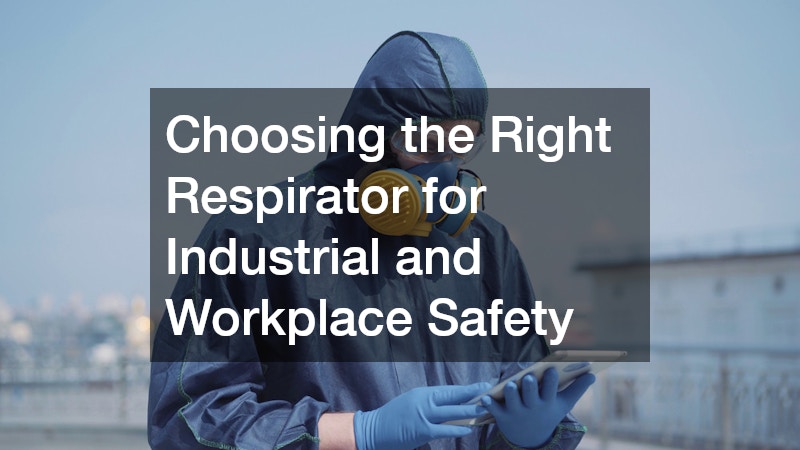
Air quality matters. In industrial and commercial settings, workers are often exposed to dust, fumes, vapors, and harmful gases. Over time, these contaminants can cause serious health problems. That’s why selecting the right respirator is critical.
It’s not just about compliance. It’s about protecting people every single day.
For safety managers and employers, choosing respiratory-protection-products’> the correct respirator requires more than picking a product off the shelf. It requires planning, evaluation, and the right supplier support.
Identify the Hazard First
Every effective respiratory protection program starts with a hazard assessment. What are workers breathing in? How concentrated are those contaminants? And how long are employees exposed?
Common airborne hazards include:
-
Construction dust and silica
-
Welding fumes
-
Chemical vapors from paints or solvents
-
Industrial gases
-
Airborne biological particles
Each hazard demands a specific level of protection. A basic disposable respirator may work for nuisance dust. It will not protect against toxic chemical vapors. Understanding the environment prevents costly mistakes and keeps workers safe. In some cases, air monitoring may be required to measure contaminant levels accurately. Clear data leads to smarter safety decisions.
Know the Different Types of Respirator Options
Not all respirator models are built the same. Choosing the right type depends on the job, exposure level, and duration of use.
Disposable Respirators
These lightweight, filtering facepiece options are commonly used in construction and maintenance work. They protect against non-oil-based particles like dust and debris.
They are affordable. Easy to distribute. Simple to use. But they are not ideal for high concentrations of hazardous fumes or gases. They are typically designed for single use and must be replaced regularly.
Half-Mask Respirators
Half-mask respirators cover the nose and mouth and use replaceable cartridges. These cartridges can be selected for specific contaminants, including organic vapors or acid gases.
This flexibility makes them popular in manufacturing environments. They offer stronger protection than disposable models and are cost-effective for repeated use. With proper maintenance, they can serve as a dependable long-term solution.
Full-Face Respirators
Full-face respirators protect the eyes as well as the respiratory system. That matters in environments with chemical splashes or heavy vapor exposure.
They provide a higher protection factor. They also offer better sealing. For demanding industrial settings, they are often the safer choice. Clear face shields also improve visibility while maintaining safety.
Powered Air-Purifying Respirators (PAPRs)
PAPRs use a battery-powered blower to move filtered air to the wearer. Breathing feels easier. Comfort improves during long shifts.
These systems are common in healthcare, pharmaceutical, and heavy industrial applications. They reduce strain and increase usability for extended wear. For workers in high-exertion roles, that added airflow can make a significant difference.
Fit Matters. A Lot.
Even the best respirator will fail without a proper fit. Gaps around the seal allow contaminated air inside. That defeats the purpose.
Employers should implement fit testing for all tight-fitting respirator models. Facial structure varies. So does equipment sizing. One size does not fit all.
Comfort also drives compliance. If a respirator feels restrictive or painful, workers may adjust it incorrectly—or remove it entirely. Adjustable straps, soft face seals, and lightweight designs help improve wear time and protection. Consistent supervision ensures employees follow fit-check procedures every shift.
Training Is Essential
A respirator alone does not create safety. Workers must know how to use it correctly.
Training should include:
-
Proper donning and removal
-
Seal checks before each use
-
Cleaning and storage procedures
-
Cartridge replacement schedules
Regular inspections are important. So is documentation. A well-managed respiratory protection program reduces risk and improves accountability. Refresher training sessions can reinforce best practices and address changes in workplace hazards.
Think Beyond Price
Budget matters. But safety should never be compromised for cost alone.
Disposable options may seem cheaper upfront. However, reusable respirator systems with replaceable filters often provide better long-term value. They last longer. They perform better in demanding environments.
Bulk purchasing through a trusted safety equipment supplier can also reduce expenses while maintaining quality. Smart procurement decisions protect both employees and the bottom line. Investing in higher-quality materials often leads to fewer replacements and improved worker satisfaction.
Work with a Reliable Safety Equipment Supplier
Choosing the right respirator becomes much easier with expert guidance. An experienced safety equipment supplier understands industry regulations, hazard classifications, and product certifications.
They can recommend appropriate models for construction, manufacturing, healthcare, or chemical processing environments. They also help ensure product availability and compliance with safety standards.
Reliable suppliers do more than sell equipment. They support long-term safety strategies and help businesses adapt as regulations or job site conditions evolve.
Make Protection a Priority
Airborne hazards are often invisible. The damage they cause is not. Respiratory illness, reduced productivity, and compliance violations can significantly impact a business.
Selecting the right respirator requires careful hazard assessment, proper fit testing, employee training, and trusted supplier support. It’s a process. But it’s worth it.
When businesses invest in the correct respirator solutions, they create safer workplaces, stronger teams, and more reliable operations. And in industrial environments, that level of protection is essential for both compliance and long-term workforce health.

Related Posts



Union Square Awards is about living and working, becoming a daily source for tips, inspiration, and guides to making the best out of life.